Showing posts with label pearl izumi. Show all posts

Monday, November 4, 2013

A is for Aero

Despite the results, I feel the cape makes me faster.
Many cyclists look at the weight of their bike meticulously. Most are in denial of their 'weight weenie' status
but will pay hundreds more for grams of difference. Likewise, there is a large group of riders that could ace many medical tests due to their research and focus on their nutrition. However, when looking at the aerodynamics of a rider, there is a stigma of being a last resort, or "too expensive" to be worth the aid.
Everybody put on your helmets because you're mind is about to be blown:


Aerodynamics is the most effective advancement a rider can make.

Now for the nay-sayers who are yelling things like "Well it only helps above 20 mph!" or "The added weight makes the aero shapes ineffective!" Stop shouting at your computer, I can't hear you.
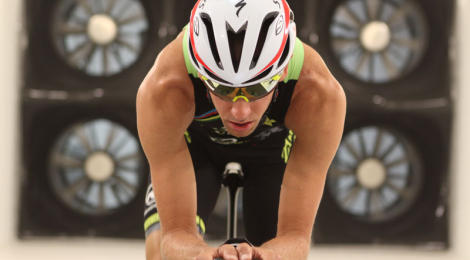
Myself and Neal were fortunate enough to do some work in Specialized's brand new wind tunnel in Morgan Hill, California. Approximately 4 hours of work, which worked out to roughly $9,000 of time and expertise in the facility.
We were there focusing on change of body position. To see if a more "aero" position was more important to the area of resistance than the loss of power from losing a neutral fit. Working with a caliber of engineers that routinely get called by NASA for help is humbling, to say the least. To say we learned a lot would be an understatement.

Here are a couple of things we learned: Aerodynamic drag is not relative to the rider's speed. While I'm sure many people feel the difference around 20 mph, wind resistance is impeding your performance the same at every speed. In fact, many of the engineers argued that because you are spending more time from A to B in the air-based resistance at lower speeds, it is actually effecting you more.
While aero equipment does end up being slightly heavier than non-winged products, weight resistance is constantly reduced by momentum, where air resistance is actually heightened by acceleration.  
The biggest take home was a staggering number of how much resistance was wind-based.
On average, 70% of a cyclist's resistance is from the air.
As much as 50% (35% of the whole) of that resistance could be from the rider themselves.

What does this tell us?
Aerodynamics is a huge part of what can make you go faster and keep you going faster.  Especially in a state where our hills come as gusts from either coast.

Best Bang for your Buck
With many companies realizing the importance of being "wind-minded," there is very good new on the horizon: equipment upgrades can be more effective for less money. When you hear aero a lot of people think of a full aero frame such as a Specialized Shiv, or carbon wheels like Zipp 404's and their hopes of cutting through wind are dashed by the price tags of these items. But if you're just looking for improvement in performace, you don't have to get the high ticket items.
The Evade, scientifically proven to be effective. 

Specialized Evade
The first upgrade recommended is an aero helmet.  The Specialized Evade has had more wind tunnel tested results than most bikes. Switching your helmet to a less turbulent model, like the Evade, actually helps a rider as much as a set of Zipp 404's. When compared to Zipp 404's price tag of $2700, the Evade's $250 price seems like a steal!


Pearl used the BMC pro team as
tests for their fabrics

Pearl Izumi P.R.O. Fabric
The cut of a rider's apparel, along with the fabric it is composed of is another big factor .Pearl Izumi P.R.O. Aero fabric is dimpled, much like a golf ball, to reduce drag by 8%. A huge advantage for a small
step up in price.


Neal's entire upper body became more aerodynamic after
his Body Geometry Fit
The Most Help You can get
Pertaining more to why we were there, the other major aero difference was made by having the bike correctly fit to the rider. When you are forcing your body to hold a position it isn't happy with, it is visible in the shape of the rider. It shows itself by bulging, contorting and compromising your naturally smooth position. It is of the utmost importance to be fit by somebody who is listening to your body and finding where it is the most aero, not by angles of the bike, but by anatomical construction and flexibility. This is the only way to find your personal level of aerodynamics and, subsequently, comfort.
To learn more about our fit program here at the shop, click here.

If you have any questions about these products, or want to know more about our Body Geometry Fit program please contact us or call the shop!

Friday, September 27, 2013

About to Break: are You Prepared for Cold?

"But you live in Florida!" Is the response I always get, each season when conversations regarding cold-weather cycling clothes come around. However, talk to any serious athlete and they would tell you the key to staving off injury and ensuring a healthy expenditure of energy is treating your body right and giving it what it needs. This might not always be what your head convinces you is the best plan of action.


Don't Trust the Weather Man
While all the apps in the world might project the temperature for the morning ride to be 65F, they are not calculating any wind chill from you moving on your bike. Just because you roll your bike out and aren't shivering doesn't mean you are experiencing the actual temperature while riding. Through the colder months it takes experience and listening to your body to know the best way to compensate.

Head, Shoulders, Knees and Toes 
There are several major places on a cyclists body that can be negatively effected by cold weather riding. Your joints can be negatively effected by the cold, even if your mind tells you it is not cold out. High-stress joints, such as one's patella area (knee cap) do not have much blood flow and take longer to warm up. So even if your core, quads and glutes are feeling great, you could still be adding stress on your body because of how far behind your knee cap is in the warm up process.
In fact, a good rule of thumb is "70 degrees, cover your knees." Don't believe me? Think this is ridiculous? Well let me throw some science at you! The patella tendon goes right over the knee cap. Because of the lack of blood flow and the poor positioning in the wind, it is naturally very tight in the wind and feels much colder due to the wind chill factor. Tendons are like rubber bands, ever stretched a cold rubber band? it doesn't. 
Also, the vastus medialis is a large muscle just under the inner side of the quads. Because of it's angle of connection to the knee cap joint the vastus medialis is crucial in a healthy knee tracking. Because of its size it takes a long time even in optimum weather conditions to warm up, and even longer in the cold. Until it is warmed up, your knee will not be tracking in a healthy rotation. 

Not Too Hot, Not Too Cold
Luckily for us cyclists, there are tons of different weights, wind protections, and body part specific coverings for cold weather riding. This allows everybody to find the exact combination that fits them in all chilly situations.

Arm, Leg & knee Warmers
A very easy way to make sure you are not hurting your body but still be comfortable is using leg, knee or arm warmers. These items are often wind proof and only cover the rider's limbs. This allows you to change your clothing with the weather. All these items are small enough to take off and put in a back pocket. They also provide no warmth to the core, which is often the last part of the body to need help in cold situations.
A great example of these type of products are the Gore Oxygen SC knee warmers. With Windstopper technology they are able to allow the knees to warm up without unnecessary insulation.

Wind Jackets & Vests
A great way to check if you are appropriately protected is if you are cold standing still but warm while riding. Because a rider's body is heating up, there is not a lot of insulation needed, the main focus is stopping the wind from cooling down the body too much.
Wind jackets, like the Cannondale Morphis jacket are perfect for this function. Not only do they provide complete wind protection to the upper body, but the magnetic sleeves detach to become a vest. This allows the body to cool down, because nobody likes being too hot.

Ear Coverings
Everybody is different but for me, my ears are one of the first parts of my body to become uncomfortably cold. It starts a chain reaction, first my ears get cold, then my head starts to hurt, then I curse the excellent ventilation of my helmet, then the ride is no fun. If you've ever been there, you want to look into something to cover your ears. Gore's Bike Headband is a great example of finding warmth without fighting a beanie into your helmet!

Gloves
These items are often overlooked in importance of fighting cold. It is an easy step, many companies provide the same level of padding as their warm weather options in a full finger style. Gloves should be one of the first steps in covering up. When it comes to shifting and braking, fingers that are slowed and stiff due to cold do not work. The Giro Gilman gloves are a great option for cold in the great state of Florida. A insulated covering is not always necessary. Often times it only takes a barrier.

Booties
While your upper body is being hit by wind, your feet are actually being hit by three fronts: wind, and rotational wind from pedaling as well as any water from wet roads or puddles. To make sure you do not throw your very expensive, very ventilated road shoes in anger towards your purple toes, try out some bootie coverings. This allows the fit of your shoes to stay the same but adds wind/water resistance on the outside of the shoe. Pearl Izumi Elite Toe Covers (we call them 'booties' because it's way more fun) are a great example of how to keep your toes as happy as you are on the bike!

Everybody is different when it comes to cold weather riding. Starting the learning process in Florida is a great location due to its timid temperatures when it comes to our "winter." No matter what, don't let the cold dictate your off season. Winter months can be the most enjoyable season for cycling and add yet another facet of how you love riding.  Get educated, get equipped and get riding!